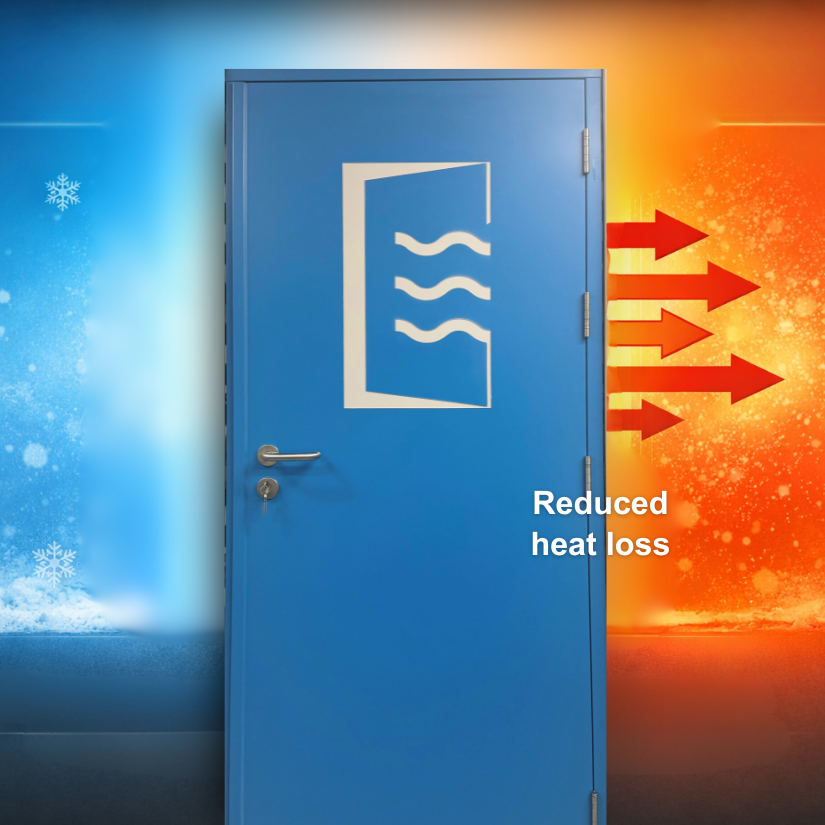
When specifying external doors for commercial, industrial, or public-sector buildings, thermal performance is now a critical consideration. One of the key measures used to assess this performance is the U-value.
In this guide, we explain what U-values are, why they matter for steel doors, and how they relate to Part L of the Building Regulations.
A U-value measures how much heat passes through a building element, such as a wall, window, or door.
It is expressed in W/m²K (watts per square metre per degree Kelvin).
In simple terms:
For external doors, the U-value indicates how effectively the doorset prevents heat from escaping the building.
Steel doors are widely used in commercial and public-sector buildings due to their strength, security, fire performance, and durability. However, traditional steel doors were not always designed with thermal efficiency as a priority.
As energy standards have tightened, steel doors must now balance:
A well-designed thermally insulated steel doorset can significantly reduce heat loss, improve overall building efficiency, and support compliance with current regulations.
Part L of the Building Regulations focuses on the conservation of fuel and power.
It sets minimum energy performance requirements for building elements, including external doors.
For steel doors, Part L sets different thresholds depending on the application:
New dwellings:
All external doors, including glazed doors, must have a maximum U-Value of 1.6 W/m²K.
For new-builds where doors are mostly glazed:
Maximum U-Value of 1.4 W/m²K, or
Minimum Doorset Energy Rating of Band C.
Replacement doors in existing buildings:
Different U-Value thresholds apply depending on the project.
External fire doorsets (as defined in Approved Document B):
Maximum permitted U-Value of 1.8 W/m²K.
These limits ensure that external doors do not undermine the overall thermal performance of the building envelope.
In new residential buildings, Part L places further emphasis on thermal performance.
For new dwellings, doors (including glazed doors) are typically required to achieve U-values around 1.6 W/m²K, depending on the overall building design and compliance approach.
This highlights how increasingly important door performance has become within modern energy-efficient construction.
Achieving a low U-value in a steel doorset requires careful engineering. Key factors include:
When these elements are correctly designed and integrated, steel doors can deliver strong thermal performance without compromising their inherent benefits.
Specifying steel doors with low U-values offers several advantages:
For commercial and public-sector projects, these benefits are increasingly important during planning, approval, and long-term operation.
It’s important to note that U-values are influenced by:
As a result, U-values are often based on tested or calculated performance within defined tolerances. Accurate specification and professional installation are essential to achieving the intended thermal results.
Today’s steel doorsets are no longer just about security and fire performance. Thermal efficiency is now a core requirement.
By understanding U-values and how they relate to Part L, specifiers and contractors can make informed decisions that balance compliance, performance, and durability.
If you’re specifying steel doors for a project where energy efficiency matters, understanding U-values is the first step toward achieving a compliant, high-performance solution.
For further information on Therma-Line thermal steel doorsets, including technical specifications and suitability for your project:
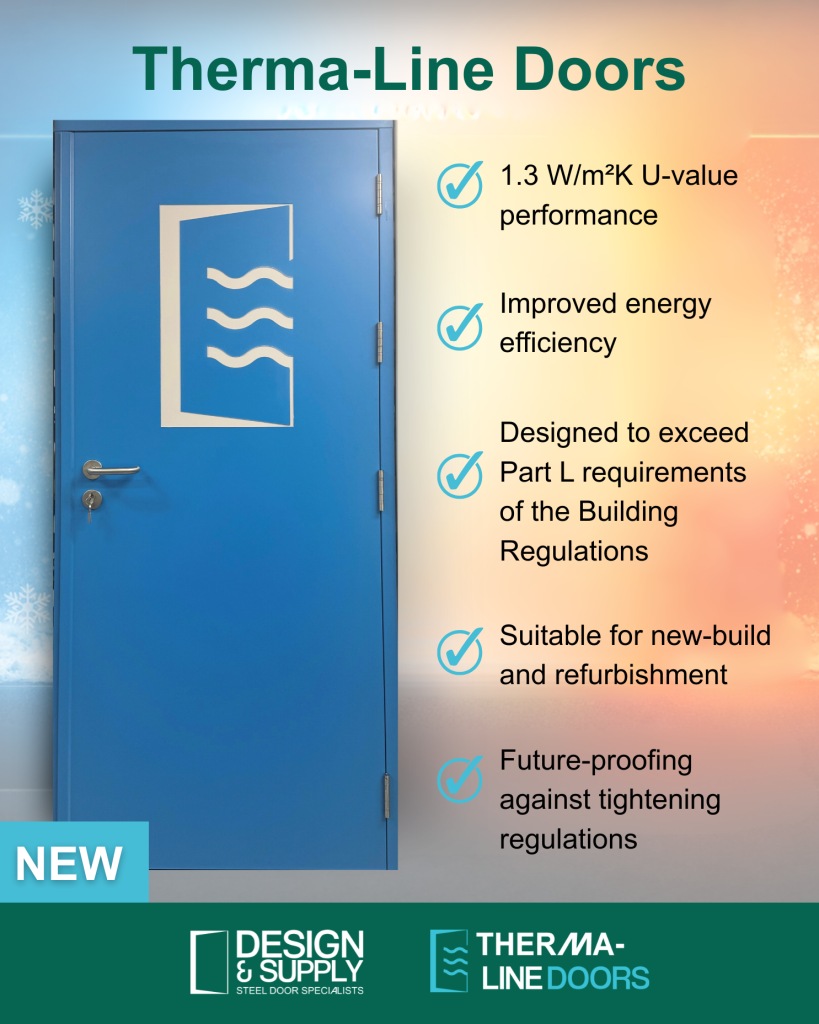
Our specialists are available to provide guidance from early specification through to manufacture and delivery.